Research-based guide: We have not personally tested these appliances. Manufacturer descriptions are identified and linked in the sources below.
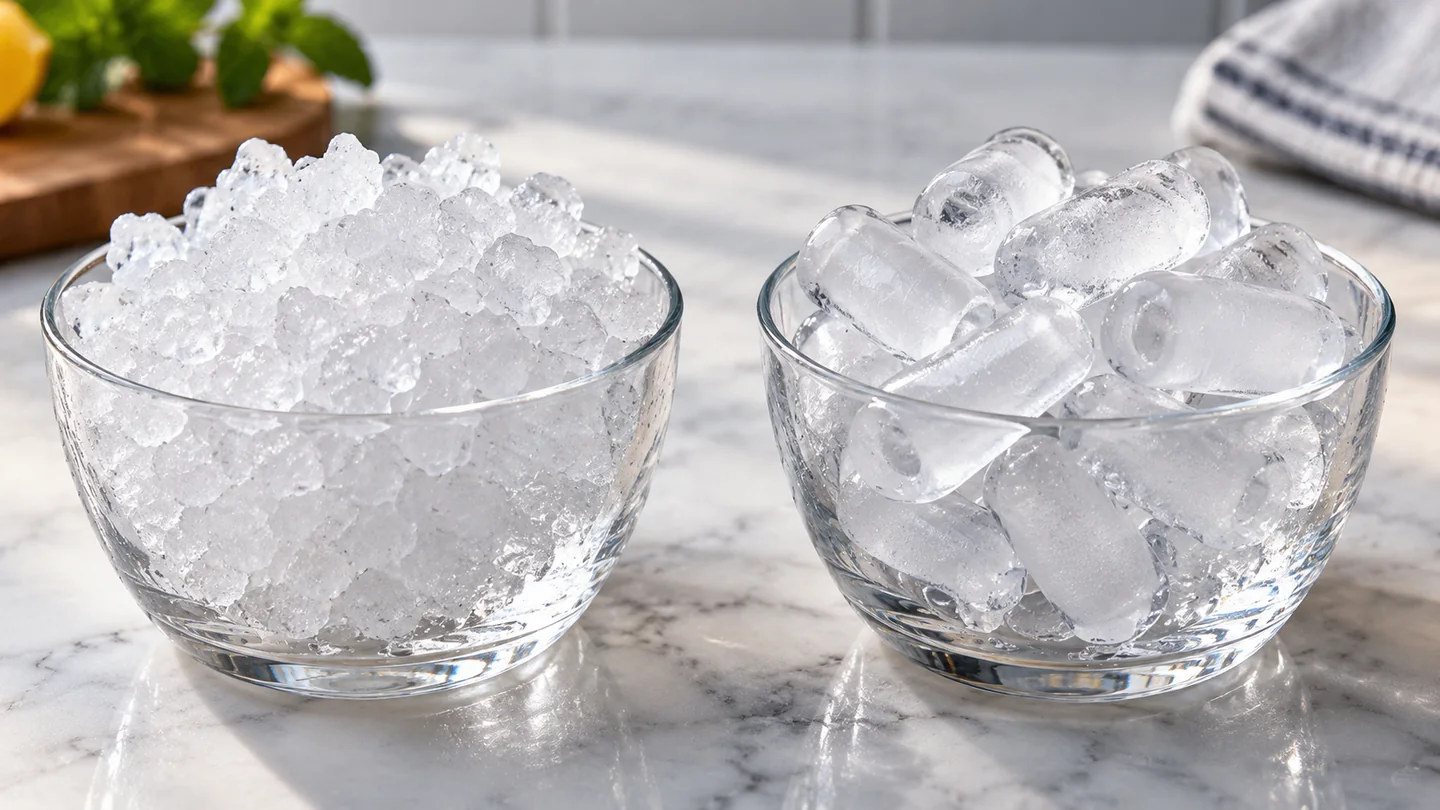
Image note: The featured comparison illustration is AI-generated to show typical nugget and bullet ice shapes; it is not a photograph of our own product testing.
Quick answer
Choose nugget ice if you specifically want soft, porous, chewable ice for soft drinks, iced coffee and similar beverages. Choose bullet ice if you prefer a firmer, hollow ice piece and are mainly looking for a practical, everyday countertop ice maker. Neither type automatically makes its machine faster, quieter, easier to clean or more reliable.
The biggest shopping mistake is comparing only the shape of the ice. Your counter space, refill routine, cleaning process, ice storage and real bin capacity deserve just as much attention.
At a glance: The differences
| Buying question | Nugget ice | Bullet ice |
|---|---|---|
| Typical ice shape | Compact, pebbly pellets made from compressed flaked ice | Rounded/hollow, often cylindrical or bullet-shaped pieces |
| Feel in a drink | Soft and porous; generally easy to crunch | Denser and firmer than nugget |
| Beverage preference | Popular for soft drinks, coffee and blended drinks | Everyday water, pitchers and general chilling |
| Melting | Often tends to melt sooner due to shape, porosity and total surface area | May melt more slowly in comparable conditions, but not guaranteed |
| Machine purchasing implication | Shop by exact nugget model and upkeep demands | Shop by exact bullet model and upkeep demands |
| Can the machine freeze and store finished ice indefinitely? | Not implied by ice shape | Not implied by ice shape |
Ice-type characterizations align with Whirlpool’s published category comparison. These are generalizations, not controlled comparative test results by Nugget Ice Advisor; actual melt rates depend on ice mass, room and drink conditions.
What is nugget ice?
Nugget ice is also called pebble ice or pellet ice. A nugget-ice machine typically builds compressed bits of flaked ice into small porous pieces. That’s what gives many nuggets their characteristic soft, airy texture. It is particularly attractive to shoppers looking for ‘the good ice’ in beverages rather than hard cubes.
If you buy a countertop nugget-ice maker, confirm the listing explicitly says nugget or pebble and identifies the model. Do not assume a product described only as a ‘portable ice maker’ makes this type of ice.
What is bullet ice?
Bullet ice is named for its rounded, hollow shape. Instead of compacted ice flakes, the piece forms around chilled fingers/prongs in a typical portable bullet-ice machine. The result is a different texture: usually firmer, less airy and less easy to crunch than nugget ice. Many shoppers who primarily want ice in water or a small pitcher may be perfectly happy with bullet ice.
Be skeptical of any machine advertised only by a photograph of white ice pieces: look up the exact machine’s listed ice type and instruction manual.
Which melts faster?
General manufacturer comparisons suggest nugget ice can melt faster than bullet ice because its pieces are smaller, porous and offer a high exposed surface area. But the outcome depends on piece size, total mass, beverage temperature, insulation, ambient conditions and the actual ice maker. We have not run a side-by-side timed experiment and do not present minute-by-minute melt data.
Ice melt inside the appliance is a separate question. A countertop machine’s ice basket may not be a freezer compartment; check whether melted water is recirculated and whether the ice should be transferred to a freezer. Even a machine that claims ‘slow melting’ is not necessarily a refrigerated storage freezer.
Which ice should you choose for your favorite drinks?
Soft drinks and iced coffee: If soft, crunchable ice is a major part of the experience, nugget is likely worth investigating. Taste and texture are subjective; this is a preference decision, not a medical or dental benefit claim.
Water, simple iced beverages and pitchers: Bullet ice may suit buyers who mainly need routine drink chilling and prefer firmer ice. It may also be worth comparing simpler countertop options; don’t assume this means every bullet-ice maker is cheaper or has greater output.
Entertaining a group: Compare machines by bin capacity (how much is available at once), actual refill steps and any freezer-transfer plan. A claim such as ’44 lb in 24 hours’ measures potential production over time, not pounds sitting ready in the basket.
What matters more than ice shape when buying the machine?
1. Size and ventilation
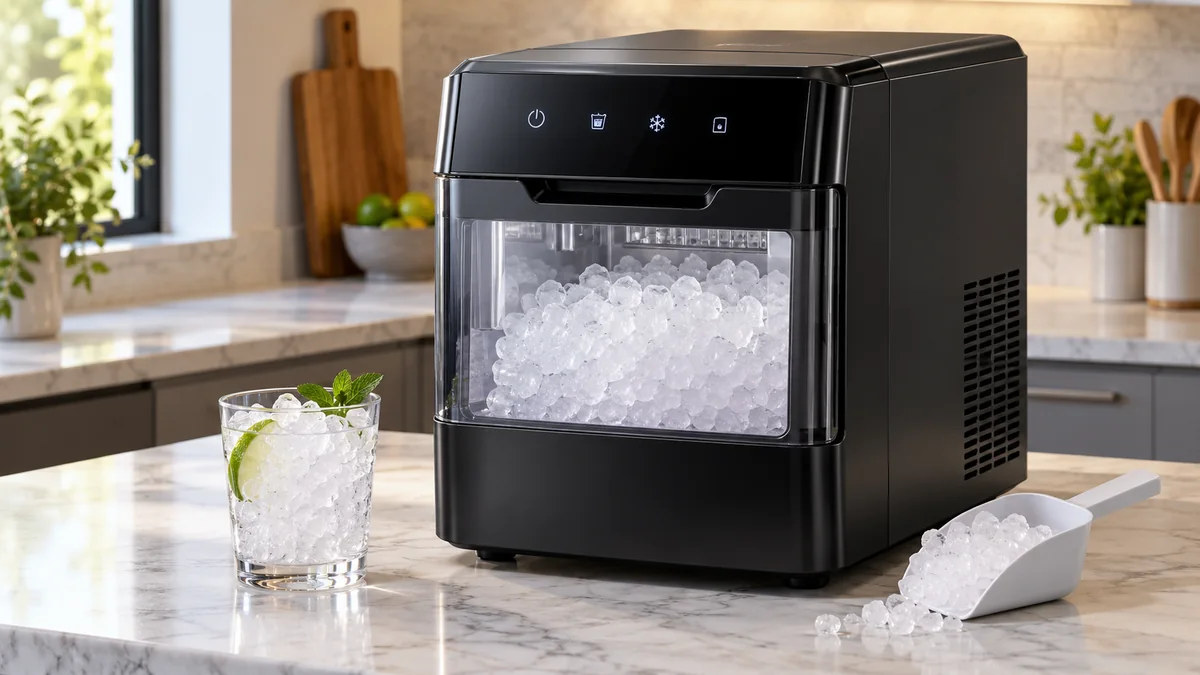
Measure the space above and behind the machine, not just its base. Lids, removable reservoirs and required ventilation can make a seemingly compact model inconvenient. Use the exact instruction manual for clearance figures.
2. Daily output vs basket storage
Look for two different specifications: claimed production per 24 hours and removable bin/basket capacity. Manufacturers may emphasize the larger number. Neither figure guarantees how much ice is ready at a particular moment.
3. Filling, drainage and maintenance
Find where water goes in and out, whether pieces are removable, and what the manufacturer’s descaling procedure requires. Self-cleaning is a function, not a promise that manual cleaning is unnecessary.
4. Noise and operation
Compressor, fan and ice-harvest cycles can make different noises. Don’t call a machine ‘quiet’ because the listing lacks a decibel number, or compare incompatible claimed dBA measurements without a consistent method.
5. Current model and availability
A model name can cover multiple versions, tank bundles, colors or renewed listings. Match the exact manufacturer model to the retailer SKU/ASIN before recommending a purchase.
Do nugget ice makers keep ice frozen?
Not always. The answer depends on the specific model’s insulated bin, active refrigeration (if any) and water recirculation design. Don’t infer frozen storage from a large advertised daily ice output or a ‘slow-melting’ claim. If freezer-like storage is essential, verify it explicitly in the technical documentation and seller listing.
Two research candidates to investigate
- Ecozy Mistalo IM-NS451B: Ecozy advertises up to 44 lb/day production, app features and removable components. We’re still reconciling dimension claims and live retailer offers; see the planned exact-model research review before choosing a color or ASIN.
- GE Profile Opal 2.0 family: Not a single SKU. An older XPIO13SCSS side-tank model is marked discontinued by GE; current version, included side tank and availability must be checked item by item.
These are research examples, not independently tested winners or a claim that they outperform all bullet-ice makers.
Bottom line
If soft, chewable ice is the reason you’re shopping, start with a genuine nugget-ice machine. If you just need dependable ice for everyday beverages, consider bullet ice too and compare exact machine requirements. Either way, a useful purchase decision weighs maintenance, storage and fit—not just the shape in a marketing photo.
Buying a countertop ice maker? Compare ventilation clearance, ice-bin capacity, cleaning routines and everyday fit with our practical nugget ice maker buying checklist before choosing an exact model.
Sources and our method
- Whirlpool, Nugget Ice vs. Bullet Ice: Which Is Better?, accessed October 8, 2026.
- Whirlpool, Types of Ice and How to Make Them, accessed October 8, 2026.
- GE Appliances, Original Opal ice maker product information, water recirculation claim, accessed October 8, 2026.
- Ecozy, IM-NS451B support and instruction-manual entry, accessed October 8, 2026.
We have not purchased, operated or physically compared nugget and bullet ice makers. Manufacturer category descriptions are not independent measurements.